
How Dogs Learn
Have you heard this statement: "Dogs have the mind of a two-year-old child."
Well, it is not that simple. Like young children, dogs learn through experience, repeat behaviors that work, respond to routines and patterns, and are definitely influenced by emotions and relationships. However, dogs are not little humans. They do not verbally communicate, reason, or learn through explanations and lectures.
Dogs are constantly collecting information that makes sense to them.
What predicts things that I like?
What feels safe?
What works?
What happens next?
Dogs understand their world and their needs remarkably well. It is our world that they do not understand. They do not understand why we leave and come back, what furniture is for, what words mean, why doors close, or why meals happen at certain times. Except for meals, most of these things do not meet their needs, but they learn that these things happen when they live with us.
Let's talk about behavior. To us, behavior is information and communication. Instead of asking: "How do I stop this behavior?", ask: "What is this behavior telling us?"
To answer that question, we first need to understand that behavior rarely has a single cause. Dogs’ behaviors do not happen in isolation. They are influenced by the environment, emotions, function, history, and learning itself.
Environment
What does the environment look like to them? Environment includes people, location, sounds, distance, movement, other animals, available choices, time of day, and routines. The environment can make certain behaviors easier or harder. A dog sensitive to other dogs may do better in an environment with fewer dogs than at a busy dog park.
Emotions
While emotions are not behaviors, they shape behavior positively or negatively and affect attention, learning, and decision making. Dogs can be curious, excited, relaxed, frustrated, or worried.
Function
Behaviors have functions that are often overlooked.
Behavior serves a purpose. Dogs behave in certain ways to seek connection such as shadowing, gain access to something, avoid something, gather information, seek comfort, increase distance, or express needs and/or emotions through behaviors such as vocalization.
History
Dogs’ behaviors are influenced by previous experiences including previous homes, routines, reinforcement history, predictability, successful strategies, and even past emotions. Two dogs can experience the exact same situation and respond differently depending on their histories.
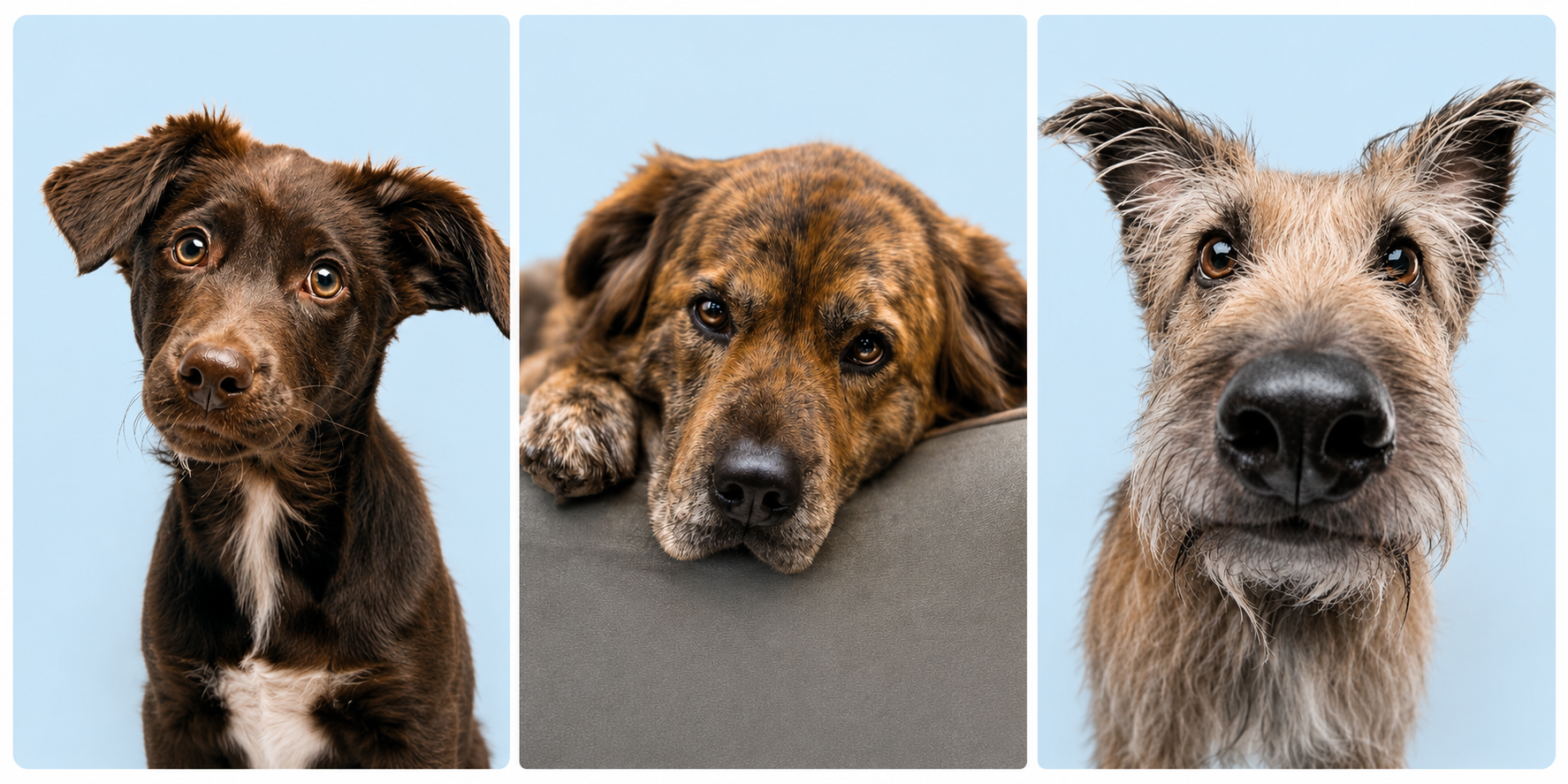
Now that we understand some of the factors that influence behavior, we can begin to understand how behavior changes over time.
Dogs have a remarkably simple rule for navigating the world: Dogs do what works for them.
If sitting in front of the door gets us to open it, dogs learn that the behavior works and because it works, they will do it again when they need to go outside. A behavior that leads to something valuable happens more often. Sitting in front of the door is valuable because outside is valuable. Going outside may meet an important need such as a bathroom break. Interestingly, sitting in front of the door is also communication.
In this previous scenario, we can conclude that dogs learn through consequences.
Dogs also learn through associations.
Our dogs literally stalk us all the time. Our activities predict what comes next for them and they become experts at prediction. Have you seen what the sight of a leash does to most dogs? They become incredibly excited because they associate the leash with going for a walk. We borrow this incredible ability to communicate with them through cues.
While dogs are masters of associations, repetition is the secret sauce that makes learning stick. They depend on repetition to learn.
We humans often confuse training with communication.
Training is often viewed as getting dogs to do what we want regardless of whether the behavior meets their needs. Communication starts by understanding how dogs learn and why they behave the way they do depending on the context. To become effective communicators, we also need to do our part. We need to communicate to dogs that we like what they are doing and we do that through reinforcement and timing.
Timing tells dogs: "That was the behavior I was talking about.”
A behavior needs to be reinforced immediately, usually within seconds. If we wait too long, the connection between the behavior and our communication is lost.
Let's dive into reinforcement.
We do not decide what is reinforcing. Our dogs get to call the shot. A reinforcement is anything that makes a behavior more likely to happen again. Circling back to our door example, opening the door is reinforcement. And yes, reinforcement is communication. We reinforce to help new behaviors develop, strengthen behaviors we like to see more often, and stabilize behaviors to make them easier and more reliable.
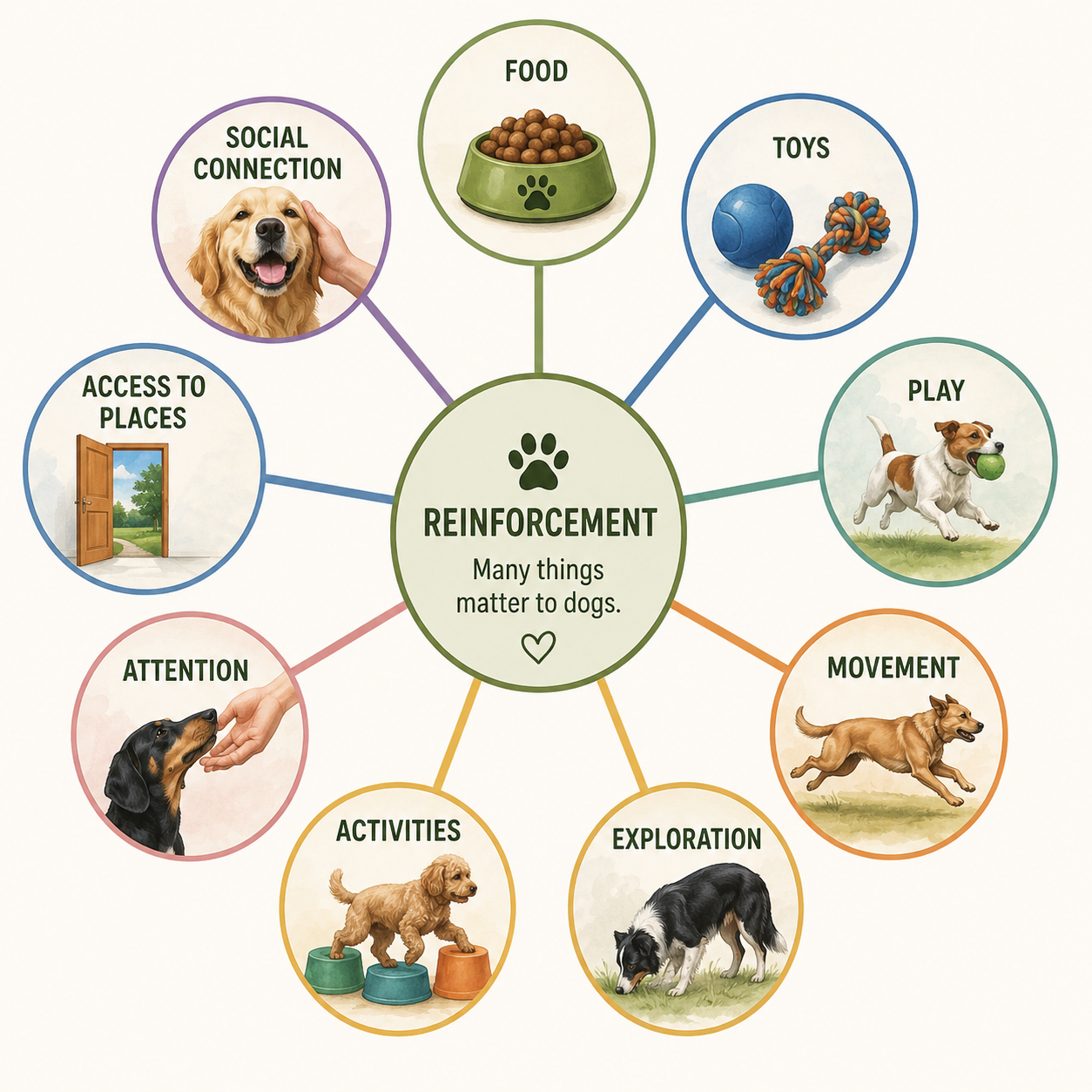
For many dogs, simply being close to their person is highly reinforcing.
Food is often preferred by both dogs and humans because it is easy to deliver, requires little previous learning, and most dogs already value it. Food allows quick repetitions. Food also gives us information. A dog who normally enjoys food but suddenly refuses it may be telling us something about their emotional state, environment, stress level, or physical comfort. Food refusal does not automatically mean stress, but changes in food interest can help us understand how the dog is experiencing the situation.
Communication grows as we understand what our dogs value and dogs learn which behaviors are worthwhile. Growth happens when we give dogs opportunities to participate. They get to opt out, check in, approach, investigate, or settle. Giving dogs agency promotes confidence, resilience, and engagement.
Communication, however, is never a one-way conversation.
Dogs spend their lives learning our routines, our schedules, our movements, and our expectations. They become experts at reading us. The question is whether we become equally skilled at reading them. There may be little understanding, communication, or learning if we fail to listen to what dogs are already telling us.
That language is body language.
And that is a conversation for another day.
Read me!